
Surprising fact: more than 70% of foreign groups chose a simplified stock company structure when they entered this market because it speeds expansion and limits local risk.
We set the stage by explaining how a parent company decides between opening a branch or forming a local company. The choice balances speed to market, costs, and governance fit.
At a high level, tax rules treat both forms similarly, but the legal profile differs. A branch ties obligations to the parent company, while a subsidiary is a separate entity that can ring-fence liabilities and help with local financing.
We will compare practical compliance, invoicing flows, and the operational benefits of each option. Our analysis highlights the main advantages and risks so we can pick the best route for our business and market goals.
Key Takeaways
- Choosing the right option affects liability, speed, and local control.
- An SAS-style company often aids financing and limits parent company exposure.
- Tax parity exists at a high level, but practical compliance differs.
- Branches may cut initial costs; subsidiaries improve local credibility.
- International reporting rules and transfer pricing shape cross-border plans.
What we mean by branch and subsidiary in Colombia
We define how a foreign head office can operate locally: either as an extension of itself or as an independent corporate vehicle. Además, esta decisión depende de varios factores, incluyendo la estructura organizativa y las metas de negocio de la empresa. Los expertos en búsqueda de ejecutivos pueden desempeñar un papel crucial en la identificación de líderes locales que se alineen con la visión global de la compañía. Al elegir la opción adecuada, se puede maximizar la eficiencia operativa y asegurar una integración fluida en el mercado local.
Branch office as extension
When we operate through a branch office, the foreign head office is the same legal person. The parent company remains directly liable for obligations and claims.
Practical effect: the office uses the parent company’s name for contracts, bank accounts often link to the head office, and corporate records mirror the foreign parent.
Subsidiary structured as an SAS
SAS companies are separate legal entity vehicles under local laws. An SAS can have a single shareholder and its own governance, officers, and bylaws.
- The SAS can hold assets, sign contracts, and be sued independently from the parent company.
- Bank accounts and invoicing bear the company name, creating clearer local credit and compliance trails.
- Despite these differences, high-level tax rules apply similarly to both models, so our focus is on operational nuance.
| Feature | Extension (office) | SAS company |
|---|---|---|
| Legal identity | Same as parent company | Separate legal entity |
| Local governance | Controlled by parent resolutions | Local bylaws and officers |
| Banking & invoicing | Parent name used | Company name used |
| Liability | Direct exposure of parent company | Limited to the company |
Legal status and liability: separate legal entity versus branch office
We examine who answers for claims, debts, and unpaid taxes when we choose how to operate locally. The legal form determines whether responsibility stops with the local vehicle or reaches our head office.
Direct exposure of the parent company for branch obligations
Operating through a branch creates a direct conduit to the parent company. Creditors and tax authorities can pursue the parent company for the branch’s liabilities.
Limited liability of shareholders in an SAS company
In contrast, forming an SAS as a separate legal entity normally keeps claims within the local company’s patrimony. Shareholders enjoy limited liability unless specific guarantees or piercing of the corporate veil apply.
- Claims reach the parent: contracts with a branch allow counterparties to seek recovery from the parent.
- Local containment: an SAS lets third parties pursue only the company’s assets in most cases.
- Financing impact: lenders may ask for parent guarantees for a branch, while an SAS can pledge its own assets.
| Issue | Parent exposure | Local company exposure |
|---|---|---|
| Commercial claims | Direct on parent company | Limited to company assets |
| Tax obligations | Attach to parent | Owed by local company |
| Governance | Parent-appointed reps | Local bylaws and boards |
Tax treatment in Colombia: similarities and key nuances
We summarize key tax rules that affect foreign entities operating locally and flag the nuances that change compliance burdens.
High-level parity and permanent establishment
Income tax applies similarly to a registered office and to a local company. Headline rates and base calculations rarely drive the choice of legal form on their own.
Permanent establishment rules matter in practice. A registered office is a clear taxable presence, but activities by a local company can also create PE for related parties depending on functions and risks.
Common local obligations and invoicing
Both forms face similar tax obligations: corporate returns, VAT registration where relevant, payroll taxes, and municipal levies. Each must issue compliant local invoices for goods and services.
- VAT on imported digital services: since 1 July 2018, purchasers must register and account for VAT, or collection may occur at payment.
- Withholding and remittance: procedures are similar, though a branch files under the parent’s legal identity while a local company files as a separate taxpayer.
- Transfer pricing: Master File, Local File and informative returns apply where thresholds are met, affecting intercompany service charges.
| Area | Requirement | Impact |
|---|---|---|
| Corporate filing | Annual return | Same treatment for incomes |
| VAT on services | Registration & invoicing | Buyer may self-account or payments collect VAT |
| Transfer pricing | Documentation thresholds | Local File when caps exceeded |
International tax overlays: DTTs, BEPS, FATCA, and CRS
Global treaties and rules shape how we report income, claim relief, and meet local obligations. They affect both a branch and a local company when we move funds, provide services, or repatriate profits.
How double tax treaties affect treaty relief
We map DTT partners that are already in force and those signed but not yet effective. Current partners include Canada, Chile, France, India, Italy, Mexico, Spain, Switzerland, the UK, South Korea, Portugal, the Czech Republic, and the Andean Community.
Treaty access can cut withholding on dividends, interest and royalties. Eligibility depends on residency and permanent establishment rules for a branch or a subsidiary.
BEPS, transfer pricing and documentation
Colombia implemented BEPS measures, aligning TP rules with OECD guidance. Re-characterization rules and a CUP emphasis for commodities change pricing for cross-border trades. Estas reformas también buscan fortalecer la transparencia y la equidad en el sistema tributario, promoviendo un entorno más competitivo para las empresas. En este contexto, se están desarrollando iniciativas de desarrollo ejecutivo para empresas colombianas, que les permitirán adaptarse mejor a las nuevas regulaciones y mejorar su estrategia fiscal. Además, se espera que estas medidas fomenten la inversión extranjera al asegurar un marco normativo más claro y confiable.
Action 13 requires a Master File, Local File and an informative return when thresholds are met — the Local File trigger is about USD 494,000 per transaction type.
FATCA, CRS and automatic exchange
Colombia has an IGA for FATCA and joined CRS through MAC and MCAA. Automatic exchange started in 2017, and Resolution 119 of 2015 sets AEOI duties for local banks.
These rules mean our treasury and banking relationships must collect documentation and report accounts that may be shared with partner countries.
| Instrument | Main effect | Impact on us |
|---|---|---|
| DTTs | Allocate taxing rights | Lower withholding; depends on PE |
| BEPS (TP) | Align pricing with functions | Detailed TP files and re-characterization risk |
| CRS / FATCA | Automatic information exchange | Reporting by banks; higher due diligence |
Transfer pricing, CFC rules, and group reporting expectations
We outline the transfer pricing and group reporting rules that shape intercompany pricing and disclosure across our operations.
OECD-based TP rules and documentation thresholds
Colombian TP rules follow OECD guidance, including re-characterization under Section 260-4 and the CUP preference for commodities in Section 260-3(1).
Practical step: prepare contemporaneous analyses and a Local File when any transaction type exceeds about USD 494,000.
Master File: mandatory if caps are exceeded. We may file it in English and must provide an official translation within 20 working days if requested.
CbC, informative returns and disclosure duties
CbC reporting does not apply directly to a Colombian subsidiary, but we must file a form stating whether the ultimate parent is subject to CbC in its residence. Además, es importante tener en cuenta que si el ultimate parent no está sujeta a CbC, esto podría influir en la decisión de cerrar una filial en Colombia. Por lo tanto, las empresas deben realizar un análisis exhaustivo de su estructura corporativa y las implicaciones fiscales. Esta evaluación permitirá a las compañías tomar decisiones informadas sobre su presencia en el país.
Informative returns trigger when thresholds are met. Timely filing keeps our tax risk and penalties lower.
CFC regime and group governance
The CFC rules apply where a Colombian tax resident holds at least 10% of a foreign controlled company. Estos residentes deben cumplir con ciertos requisitos para una holding en Colombia, que aseguran la correcta estructuración y operación de la misma. Además, es fundamental que se cumplan las normativas fiscales tanto a nivel local como internacional para prevenir cualquier tipo de sanción. La adecuada planificación y cumplimiento de estas regulaciones es clave para maximizar los beneficios fiscales y evitar conflictos con la administración tributaria. Es importante destacar que muchas empresas estadounidenses en Colombia están aprovechando estas estructuras para optimizar su carga fiscal. Asimismo, el análisis continuo de los cambios en las normativas fiscales locales e internacionales permitirá a estas empresas adaptarse rápidamente y mantener su cumplimiento. Por lo tanto, la asesoría profesional se vuelve indispensable para asegurar que todas las operaciones se manejen de manera eficiente y dentro del marco legal establecido.
We must include our proportionate share of the CFC’s income, costs, and deductions in our local tax base. This raises considerations for group pricing and treasury.
Governance note: intercompany service fees and financing must reflect arm’s length terms and be backed by robust documentation to withstand re-characterization challenges.
| Requirement | Threshold / Trigger | Key effect |
|---|---|---|
| Local File | Per transaction type ≈ USD 494,000 | Detailed local benchmarking and support |
| Master File | When caps exceeded | Global overview; English filing allowed with translation on request |
| Informative return | When documentation thresholds met | Summary disclosures to tax authorities |
| CFC inclusion | Ownership ≥ 10% | Proportionate foreign income taxed locally |
branch vs subsidiary colombia: control, governance, and market adaptability

Our focus here is how control structures affect daily decision-making and strategic agility. We compare centralized authority with local autonomy and how each choice shapes market responsiveness.
Centralized control with branches versus local autonomy in subsidiaries
Centralized control keeps decision rights with the parent and speeds uniform rollouts. Appointed legal reps follow clear directives and preserve brand consistency.
Local autonomy lets a company adapt pricing, product features, and customer service to local markets. A separate local entity can act faster on market signals and sharpen accountability via an independent P&L.
Brand consistency, local adaptation, and strategic responsiveness
Speed favors centralized models for uniform launches, while autonomy favors quick tweaks. Both structures can use service agreements, cost-sharing, and IP licenses to align operations and transfer pricing.
| Aspect | Centralized | Local entity |
|---|---|---|
| Control | Parent-led decisions | Local managers empowered |
| Speed | Fast uniform rollouts | Fast local adjustments |
| Accountability | Integrated results | Separate P&L and clearer metrics |
Setup, costs, and compliance under Colombian regulations
Before we commit capital, we must compare practical setup steps and recurring compliance needs. The choice affects timelines, upfront costs, and ongoing obligations under local regulations.
Incorporating an SAS company: flexibility and single-shareholder option
Incorporating an SAS is fast and flexible. We can establish subsidiary capital with one shareholder and tailor bylaws to our governance needs.
Typical steps include drafting bylaws, notarizing the deed, registry entry, and obtaining tax and payroll registrations. Timelines often run a few weeks to a month.
Registering and operating a branch office: filings and parent-company linkage
Registering an office requires documents that prove the parent company’s existence and corporate purpose. We must appoint local legal representatives and file powers of attorney.
The parent company remains directly liable for the office’s obligations, which may reduce some setup costs but raise long-term risk.
Employment laws, payroll, and ongoing compliance
Employment laws apply to both structures. We must register payroll, remit social security, and comply with contract rules and severance obligations.
Ongoing compliance local includes invoicing, VAT (including digital services rules), statutory books, annual reports, and a compliance calendar to track filings and audits.
| Item | Typical cost areas | Notes |
|---|---|---|
| Initial | Legal, notarial, registry | Office type affects documentation |
| Recurring | Accounting, payroll, tax filings | Similar tax regime for both company forms |
| Operations | Banking KYC, leases, vendors | Banks may request parent company documents for branches |
Risk profile, restructuring options, and exit planning
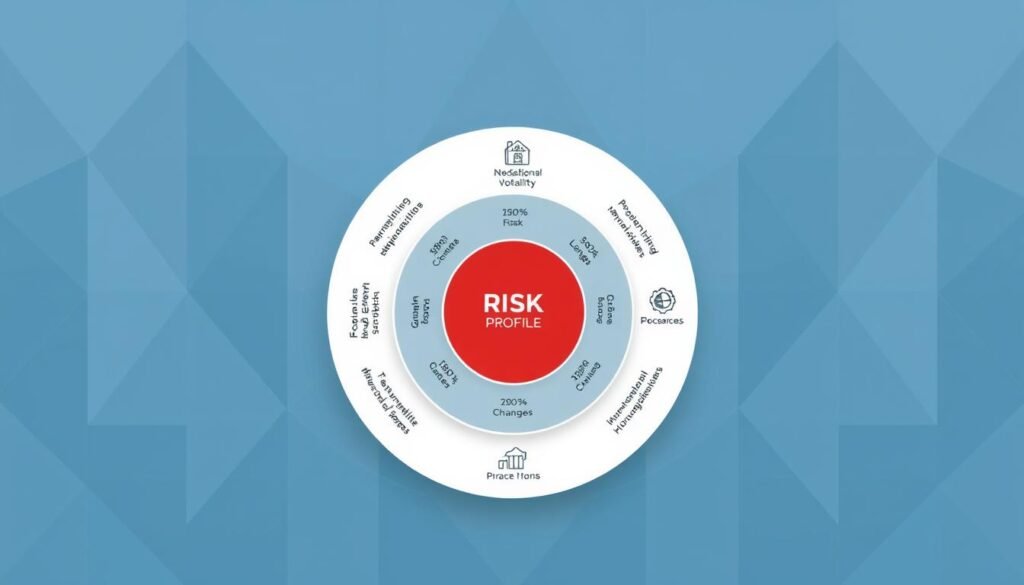
We assess how concentrated operational exposure affects our group when local activities link directly to the parent. This concentration raises the chance of wider claims and tax disputes in the home jurisdiction.
Operational and legal risk concentration
Operating as an extension centralizes liability and legal risk at the head office. That exposure can increase contestation from creditors and tax authorities.
Mitigation steps:
- Buy targeted insurance and increase contractual limits to cap third-party claims.
- Use robust internal controls and clear service agreements to limit operational risk.
- Consider migration from a branch to a local entity as a long-term structural option to ring-fence exposure.
Mergers, de‑mergers and tax-neutral paths
Colombian laws allow tax-free mergers and de‑mergers when strict conditions are met. The surviving or beneficiary entity must be resident and de‑mergers must involve business units. Además, para beneficiarse de este régimen, es fundamental que las entidades involucradas cumplan con las características de una empresa LTDA, lo que incluye contar con un número limitado de socios y una responsabilidad limitada al capital aportado. Asimismo, la planificación adecuada de la fusión o escisión debe garantizar que se preserven los activos y pasivos de manera ordenada, evitando así cualquier tipo de carga fiscal inesperada. Este enfoque permite a las empresas reorganizarse de forma eficiente y adaptarse a cambios en el mercado sin enfrentar consecuencias tributarias adversas.
| Condition | Threshold | Effect |
|---|---|---|
| Share proportion (unrelated) | 75% | Preserves tax neutrality |
| Share proportion (related) | 85% | Higher consolidation test |
| Consideration-in-shares | ≥90% (99% if related) | Avoids taxation on transfer |
| Non-resident groups | Colombian assets ≤20% | May access tax-free treatment |
For exit planning, winding down a branch is often faster but can expose the parent to lingering claims. Selling shares of a local company is cleaner but takes longer and requires buyer diligence.
Decision framework: when we recommend a branch or a subsidiary
We outline a concise decision map so we can pick the structure that aligns with our budget, control needs, and market ambitions.
Budget and risk appetite: If we run a low-cost pilot with limited staff, the cheaper option often works better. For larger scale plans, the benefits of a separate local company usually outweigh setup costs.
Industry fit and services mix
Regulated sectors, heavy contracting, or frequent cross-border services favor a local company because legal separation reduces exposure and eases stakeholder negotiations.
Control, operations and obligations
When tight control and uniform processes matter, an extension keeps parent oversight simple. When local autonomy speeds procurement, hiring, and customer onboarding, a local company boosts responsiveness.
- TP & reporting: High intercompany volumes raise transfer pricing and reporting obligations regardless of form.
- Practical recommendation: Use the cheaper option for trials; adopt the local company for scalable growth and complex markets.
| Criteria | Recommended option | Key benefit |
|---|---|---|
| Low budget pilot | Extension | Lower upfront cost |
| Scalable growth | Local company | Limited liability, local credibility |
| High TP exposure | Local company | Simpler documentation and stakeholder trust |
Choosing our path in Colombia’s market
This section rounds out our analysis with actionable next steps for expansion and entry into the market. We confirm that tax parity means the decision rests mainly on governance, liability and operational goals.
For scale and risk containment, we lean toward a local company structure. A local entity improves brand positioning, gives agility for customers, and limits exposure to the parent.
When we want a lean presence to test demand, a registered office tied to the parent can speed setup and keep initial costs low. That option suits short pilots and tight central control.
Across either route we adopt a compliance-first mindset: robust transfer pricing files, VAT on digital services where relevant, and banking reporting under FATCA and CRS.
Next steps: finalize the decision matrix, model costs and timelines, then begin incorporation or registration with a clear compliance calendar for our expansion.