
Surprising fact: more than 70% of business form changes in Colombia preserve the same legal identity rather than forcing a fresh start. Este fenómeno permite que muchas empresas mantengan su historia y reputación en el mercado, lo que es crucial para la continuidad de sus operaciones. Además, para aquellos interesados en emprender, es fundamental conocer los pasos para registrar una empresa sas, ya que este tipo de sociedad ofrece ventajas fiscales y limitación de responsabilidad. La adaptabilidad del marco legal colombiano brinda una oportunidad única para la innovación empresarial sin perder la identidad previamente establecida.
We explain the legal path called transformación, the tool that lets a sociedad change its corporate tipo without dissolving. This route keeps the entity’s legal personality, activities, and patrimonio intact under Article 167 of the código comercio.
Obligations taken on before the reforma remain binding, so creditors stay protected and partners cannot escape preexisting debts. If the shift increases partners’ responsabilidad, unanimous approval is required and dissenting socios may exercise the derecho de retiro.
We will map the requisitos and steps required by law and by Ley 1258/2008 when the matter involves SAS ↔ Ltda. Our guide aims to help societies complete the transformación, register the document correctly, and avoid common pitfalls like missing unanimity or failing to elevate the instrument when escritura pública is mandatory.
Key Takeaways
- Transformación lets a sociedad change its corporate type without dissolution, preserving continuity.
- Article 167 maintains legal personality, assets, and contracts during the process.
- Obligations before the change remain; creditors stay protected under Article 169.
- Unanimity is required if partners’ responsibility increases; others may have withdrawal rights.
- Document form follows the new type’s rules — register in Cámara de Comercio and elevate to escritura pública when needed.
Understanding the legal “transformación” of sociedades in Colombia
Under the Código de Comercio, transformación enables a sociedad to adopt a new corporate tipo without ending its legal life.
What transformación means and when it applies
Transformación is a formal reform of the company contract that changes form while preserving legal personality.
The mechanism applies only before dissolution, per Article 167; once a sociedad begins liquidation, transformación is no longer available.
Key legal bases and continuity
Article 167 authorizes the change; Article 169 protects preexisting obligations so creditors keep their remedies.
Article 171 requires us to meet every requisito of the target tipo before registration.
Practical requisites, approvals and control
- When responsabilidad increases, unanimity of socios is required; otherwise the dissenting partner has a derecho to withdraw.
- Documentation must follow Article 110 formalities; some transformations need escritura pública.
- The Cámara de Comercio performs control of legalidad and checks estatutos, minutes, and registration data at first vez.
SAS to Ltda.: step-by-step transformation under Ley 1258 and the Código de Comercio
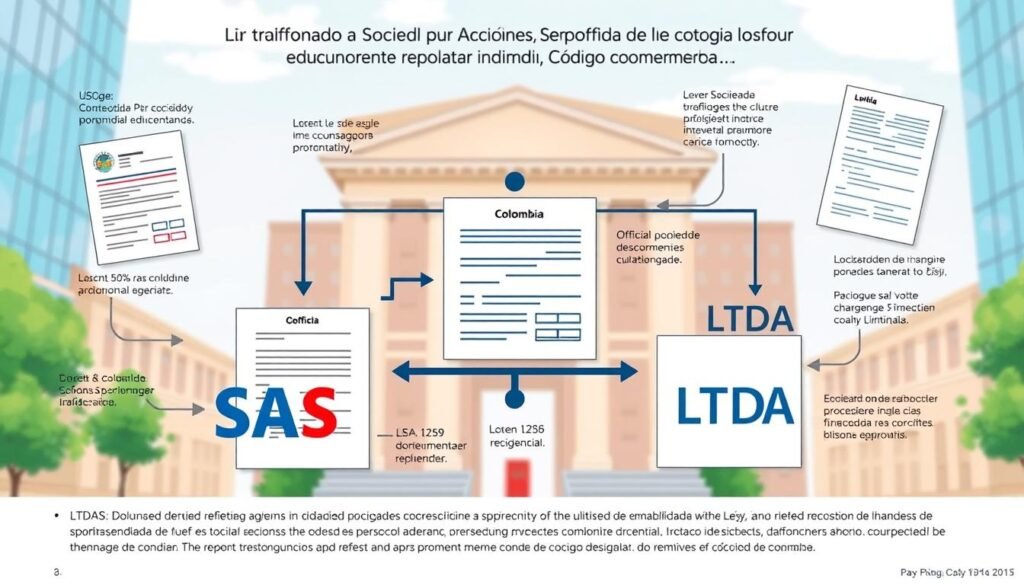
We lay out the practical route to change a sociedad acciones simplificada into a sociedad responsabilidad limitada, focusing on approvals, documents, and registry tasks required by the ley and the código comercio.
Approval by the assembly
We convene the assembly and obtain unanimous approval of holders of all acciones suscritas as required by Ley 1258, artículo 31. Without full unanimity the Cámara will refuse the filing.
Document pathway and elevation to public deed
We draft minutes and a reforma document that include the full text of the new estatutos and the allocation of capital into cuotas.
Because the nuevo tipo is a sociedad responsabilidad limitada, we prepare a documento privado for record and then elevate the act and bylaws to escritura pública under Artículo 110 before filing.
Registration and statutory alignment
- We verify requisitos: two to twenty-five socios, capital divided into cuotas, and language limiting socios’ responsabilidad limitada per Artículo 171.
- We file the public deed and updated estatutos at the Cámara de Comercio, pay fees, and secure the updated registration certificate.
- We convert share records into quota ledgers, update management books, and notify banks, DIAN and counterparties—preserving continuity under Artículo 167 and existing obligations under Artículo 169.
Practical tip: audit all references to the ley and código comercio in the reform package to satisfy the Cámara’s control de legalidad and avoid rejections.
From Ltda. to SAS: practical path to flexibility and single-shareholder control
We describe a clear route to move a sociedad responsabilidad limitada into a sociedad acciones simplificada so partners can secure flexible governance and, later, single-shareholder control.
Managing partner-count limits in sociedad de responsabilidad limitada before conversion
A sociedad responsabilidad limitada must have between two and twenty-five socios. It cannot lawfully remain with a single partner.
For that reason, we must plan the transformación before any exit that would leave only one owner. Otherwise the constitution requirements would be breached and the Cámara may reject filings.
Execution: reforma estatutaria by documento privado, registration, and issuance of acciones
We draft a reforma estatutaria that converts cuotas into shares and aligns bylaws to the sociedad acciones simplificada modelo. The reforma is prepared as a documento privado and authenticated as required.
- Requisitos: record unanimity where needed, update capital structure, and state the new governance and administrator appointments.
- We register the document at the Cámara de Comercio to formalize the transformación and trigger the issuance of acciones.
- Under the ley, a private, notarized document suffices for the new sociedad acciones and speeds Registro Mercantil processing.
After registration, quotas convert into acciones and we can legally consolidate ownership in a single shareholder. We then notify banks, tax authorities, and counterparties, preserving prior obligations and ensuring smooth control transition.
Compliance guardrails, responsabilidad, and control during transformación

We set clear compliance guardrails to secure each etapa of transformación and protect stakeholders. The Código de Comercio frames the duty to meet every requisito of the nuevo tipo before we file.
Requisitos for the target sociedad and legal limits
We verify that the target sociedad satisfies structure rules: partner counts, capital format, and governance organs. Article 171 requires full alignment with the new model.
Not all entities may change. Cooperatives and other noncommercial legal forms keep distinct natures and cannot become commercial sociedades under the código comercio.
Responsabilidad frente a terceros (Article 169)
We manage external risk carefully. Per artículo 169, obligations incurred before registration remain enforceable despite any later change in partner responsabilidad.
If the reforma raises partner exposure, artículo 168 makes unanimity mandatory; dissenting partners may withdraw rather than accept higher responsabilidad.
Frequent pitfalls and registry control
- Failing to secure unanimity when required.
- Omitting escritura pública where the resulting sociedad demands elevation under Article 110.
- Submitting incomplete estatutos that fail Cámara de Comercio control de legalidad.
We document every decision, follow formalities of the target sociedad, and align filings so the Cámara’s control and our legal position remain solid through the transformación.
Next steps to complete your transformación with confidence
To finish a transformación smoothly, we follow a clear checklist that protects continuity and closes gaps.
We map the target tipo’s requisitos and draft bylaws so the new structure fits legal form. We keep paragraphs short and records precise to help registry review.
We secure the unanimous decision where required by Ley 1258, article 31, and choose the correct instrument. A private, notarized document often suffices, but if the resulting sociedad acciones or sociedad acciones simplificada demands escritura pública, we protocolize before filing.
We file at the Cámara de Comercio, monitor the legal review under the código comercio, and rely on Articles 167 and 169 to preserve continuity. Finally, we update books, confirm responsabilidad limitada language, and protect stakeholder derecho and responsabilidad post‑registration.