
Did you know that most customs delays start with one missing document? We face timing rules that shape every cross-border move. Registering with MINCIT is mandatory before filing with DIAN, and declarations may be lodged up to 15 days before arrival or up to two months after.
We lay out the framework that guides our international trade choices. This includes who governs each step, the core paperwork we must supply, and when sector permits or a certificate of origin matter.
Compliance is central. Accurate invoices in Spanish, correct tariff codes, and timely filings reduce costs and unlock tariff preferences like Andean and GSP benefits. We also rely on services such as customs brokers, bonded warehouses, and the VUCE single window to streamline processes.
In this guide we clarify what information to gather, how to avoid common pitfalls, and how to turn rules into market opportunities while protecting health, safety, and fiscal interests.
Key Takeaways
- Register with MINCIT before filing with DIAN to start legal clearance.
- Prepare Spanish commercial invoices and certificates of origin when needed.
- Use VUCE and customs brokers to cut delays and fees.
- Accurate tariff classification protects us from penalties and storage charges.
- Preferential access can reduce costs when eligibility is confirmed.
What We Mean by Import and Export Regulations in Colombia
We map the legal steps that shape how goods move across our borders.
MINCIT leads policy and registration for foreign trade while DIAN runs customs control, declarations, and collections. This division makes roles clear and speeds decision-making when we follow standard procedures.
Most transactions need a core set of documents: import registrations, customs value declarations above USD 5,000, formal declarations, and supporting proofs such as certificates of origin or sectoral permits.
Preferential agreements like Andean preferences and the GSP can change tariff treatment. When we seek reduced duties, we must submit specific proofs to qualify.
- Correct tariff classification and clear product descriptions determine duties and any sector controls.
- The model balances facilitation with enforcement through inspections and after-clearance checks.
- Our teams must document each stage to meet audit requirements and maintain traceability.
Clear, complete documentation and timely registrations reduce delays and cost.
How Imports Work in Colombia: Registration, Declarations, and Documents
To avoid delays, we focus on precise registration, correct valuation, and timely filing for each shipment.
Registering with the Ministry of Commerce
Every importer must complete registration at the ministry commerce (MINCIT). We file an Import Registration Form with our identification, a clear product description, and the tariff code. Accurate registration prevents classification disputes and speeds later steps.
Filing the DIAN Declaration and Key Timelines
We submit the Declaración de Importación to DIAN up to 15 days before arrival or within two months after. Missing this window risks storage fees and inspection holds.
Value, Documents, Payment, and Clearance
When value equals or exceeds USD 5,000 FOB we complete the Andean Customs Value form using the transaction value method. Required documents include a commercial invoice in Spanish, a certificate origin when claiming preferences, and any sectoral permits.
Payments for customs duties, VAT, surcharges, and fees go through an authorized financial entity tied to the arrival office. After payment, customs may inspect goods before authorizing warehouse withdrawal.
- Keep all form sets and commercial records for at least five years.
- Reconcile invoice, packing, and declaration data to maintain compliance.
Export Procedures from Colombia: From Certificate of Origin to Final Clearance
We follow a clear checklist that turns buyer commitments into cleared shipments.
Start with commercial terms. We issue a pro forma invoice, secure acceptance of payment terms (often a letter of credit), and arrange financing with a local bank. These steps reduce payment risk for exporters.
Requesting origin proofs. When the destination country requires a certificate, we file the producer/offer/origin determination form with MINCIT’s regional office. MINCIT usually issues the certificate within 24 hours.
For textiles bound for the united states, we obtain a textile visa from MINCIT and ensure it is stamped on the commercial invoice to avoid arrival delays.
Completing export formalities
We complete the Export Declaration form, gather the transport document, commercial invoice, and any sector approvals, then present the full package to DIAN.
DIAN may inspect goods before granting final authorization. We verify descriptions, tariff codes, quantities, and values match across all documents to prevent holds.
| Step | Key form | Typical lead time | Notes |
|---|---|---|---|
| Buyer acceptance | Pro forma / invoice | Immediate | Secures payment terms via bank |
| Origin proof | Producer/origin form | ~24 hours | Needed for preferences or quotas |
| Customs filing | Export Declaration | At dispatch | Presented to DIAN with supporting documents |
| Sector approvals | Specific authorizations | Varies by product | Emeralds, gold, species require agency sign-off |
Preferential Access, Free Trade Agreements, and Market Opportunities

By matching product specs to rules of origin, we unlock tariff breaks and faster clearance.
Leveraging U.S. preferences, GSP, and Andean arrangements
Many of our products enjoy duty-free or reduced tariffs under Andean preferences and GSP programs. We verify origin proofs and complete certification so exporters claim those savings.
How we use these tools: we map eligible products, estimate landed-cost gains, and target markets where tariff relief boosts competitiveness.
Reciprocal benefits under Partial-Scope and Free Trade Agreements
Free trade agreements create reciprocal access with clear rules. We review each trade agreement to confirm qualification steps and document origin for speedy clearance.
How recent reforms eased costs and expanded export potential
Recent reforms reduced tariffs and simplified clearance. This shortens cycle times from order to departure and lowers expenses for exporters and logistics services.
| Agreement | Key benefit | Top target markets |
|---|---|---|
| Andean preferences | Lower duties for eligible products | United States, EU |
| GSP programs | Preferential access for priority goods | Developed countries with GSP |
| Partial-scope / FTA | Reciprocal treatment; quotas or tariffs | Regional countries; specific markets |
We track regulatory updates and coordinate classification, origin certification, and broker support so our offers reflect true cost advantages. This keeps our market entries timely and profitable while reducing compliance risk.
Using Colombia’s VUCE System to Streamline Foreign Trade
The Unified Portal for Foreign Trade (VUCE) centralizes most procedures so our files move faster and with fewer errors.
Submitting forms, making online payments, and tracking requests
We upload each required form through the VUCE system and attach supporting documents. This gives us current information on processing status and any observations from authorities.
We make secure online payments inside the portal so payment confirmations link directly to declarations. That reduces stops and avoids separate bank reconciliations.
Coordinating with customs brokers and bonded warehouses
Major brokers operate bonded warehouse offices where many clearance steps finish before delivery. We coordinate timelines so goods spend less time at terminals.
- Centralize submissions on VUCE to track requests end-to-end.
- Standardize files: naming, version control, and data validation.
- Pre-validate classifications and licensing rules to avoid rejections.
For technical guidance and official steps, we consult the import requirements and documentation page.
Duties, Valuation, and Compliance Essentials for Importers
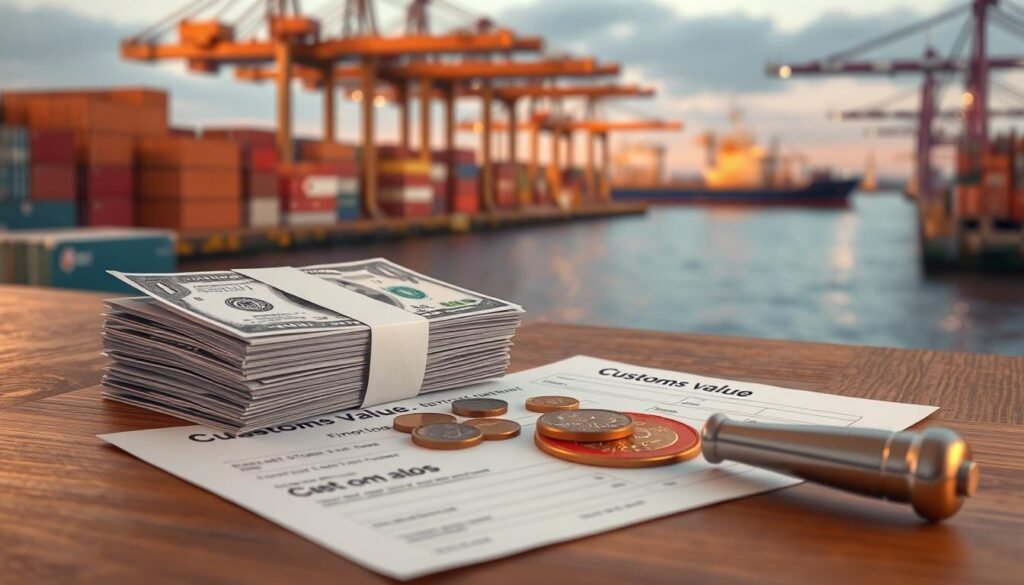
Clear valuation, prompt payments, and strong records keep our shipments moving fast. We follow the GATT Valuation Code and use the transaction value method, adding documented adjustments when needed.
Applying transaction value and documenting adjustments
We complete a Customs Value Declaration for shipments at or above USD 5,000 FOB and for partial consignments that reach that total. Accurate value work helps us resist challenges during audits.
Calculating and paying duties, VAT, surcharges, and fees
We estimate customs duties, VAT, surcharges, and fees before arrival. Payments go through authorized financial entities linked to the customs office so references match the declaration and release proceeds promptly.
Exceptions and special modalities to check before shipping
Special pathways include temporary imports for re-export, re-imports for reconditioning, goods for assembly or transformation, warranty returns, and postal or urgent deliveries. Each route needs specific documents, a certificate when required, and tailored compliance steps.
- Retain all document sets for five years and prepare for after-clearance reviews.
- Align product specs and labeling to market standards to avoid extra inspections.
- Monitor customs focus areas—misclassification, under-valuation, and origin—to reduce risk.
| Item | When required | Who files | Key note |
|---|---|---|---|
| Customs Value Declaration | ≥ USD 5,000 FOB or aggregated shipments | Importer / Broker | Supports transaction value and adjustments |
| Payments | Before withdrawal | Importer via authorized bank | Reference must match office of clearance |
| Special modalities | Depends on use (temporary, re-import, warranty) | Importer with sector agencies | May require additional permits or forms |
| Record retention | After clearance | Importer | Keep documents for five years for audits |
Import and Export Regulations in Colombia: Roles of DIAN, MINCIT, and Other Authorities
We coordinate multiple agencies to keep clearance predictable and document flows tight.
MINCIT manages registration processes and issues origin certificates that support preferential treatment. DIAN handles customs declarations, inspections, levy collection, and final release decisions.
When sectoral approvals are required
Certain goods need extra sign‑offs before we book transport. The Environment Ministry oversees species and protected items. MINERALCO verifies gemstones, while Banco de la República controls gold exports.
The Health Ministry authorizes biological materials. INPA reviews fish and specific animal products. We must secure these approvals as part of our pre‑shipment checks.
Operational timelines and coordination
We file the import declaration up to 15 days before arrival or within two months after a shipment lands, depending on the case. This window sets our calendar for payments, inspections, and warehouse moves.
- We confirm ministry commerce registration and sector permits during pre‑booking.
- We align broker activity and bonded warehouse timelines to speed market entry.
- We map country‑specific controls to avoid duplicate procedures across nearby countries and destination markets.
| Authority | Scope | Typical action |
|---|---|---|
| MINCIT | Registration & origin | Issue certificates; record exporters |
| DIAN | Customs control | Process declarations; inspections; collections |
| Sector agencies | Health, environment, mining, fisheries | Grant specific approvals pre‑shipment |
Practical tip: build registration checks into our workflow so documentation and procedures match each market’s requirements before goods move.
Bringing It All Together: Actionable Steps for Compliance and Growth
This final section gives clear, practical steps to make compliance a driver of growth; strong, practical steps we can follow now.
We verify MINCIT registration, confirm tariff classification, then schedule DIAN filings. For imports above USD 5,000 FOB we prepare a Customs Value Declaration, pay via authorized financial entities, and keep records five years.
Use the VUCE system to pre-validate forms, track approvals, and reduce stops at customs. Map origin proofs and certificates where preferences apply to cut duties for target markets.
We standardize who drafts each document, who signs commercial invoices, and who resolves exceptions. Train teams, review metrics quarterly, and update processes to grow exports, move goods faster, and keep compliance central to our trade strategy.