
Between 1986 and 2010, nearly 3,000 to 4,000 trade unionists were killed, a stark figure that shapes how we read every today about worker organization and collective bargaining.
We examine how trade union strength once ranked high in Latin America and how violent repression in the 1980s and 1990s changed the landscape. That history still affects membership levels, bargaining coverage, and the safety of leaders and members.
Our goal is practical: we map current union density, collective agreement reach, and the major confederations that shape industry and sector outcomes. We explain how the government and employers influence rights, employment terms, and protection for unionists.
Throughout, we use data and policy analysis to show what works and what must change to strengthen representation and improve results for workers across the country.
Key Takeaways
- We set the scope: history, current membership, bargaining rules, and violence against trade union leaders.
- Union density is low and collective agreement coverage remains limited.
- Major confederations shape outcomes across industry and sector.
- Government recognition of the movement in 2023 aims to improve protection and investigations.
- Our focus is practical: policies and employer actions can improve rights and employment relations.
Why labor unions matter in Colombia right now
Rising threats and uneven employment conditions make trade representation essential across sectors in Colombia today.
Concrete risks and recent numbers show why we must pay attention. The ITUC recorded 22 trade unionists killed globally to March 2024; 11 of those deaths occurred in Colombia. Between 2020 and 2023, 45 murders of trade unionists were recorded, with 29 in 2022.
In 2023 the government formally recognized the trade union movement as victims of conflict. This recognition opens pathways for better investigations and protection.
- We explain how collective bargaining secures fair pay, job security, and safety where threats persist.
- We show how trade action raises standards, reduces inequality, and enables social dialogue among employers, unions, and the state.
- We note that unions give small groups of workers and women a stronger voice on harassment, health, and hours across sectors.
- We highlight employer benefits: predictable bargaining that improves retention, productivity, and trust.
In short, trade union presence and freedom of association are part of public interest. Where conflict and threats remain, open, lawful representation strengthens democratic participation and workplace resilience.
From early struggles to modern federations: a brief history of trade unions
Militant organizing in the 1920s began a chain of events that led to today’s major confederations. Activity around foreign firms such as United Fruit and Standard Oil sparked strikes and a new worker identity.
Banana strike legacy and La Violencia
The 1928 banana strike ended in the Banana Massacre, with deaths estimated from dozens to 3,000. That event became a touchstone in labour history and literature.
La Violencia and the 1950s ruptured organizing. The UTC formed under Catholic social doctrine while the CNT briefly appeared under Rojas Pinilla before being shut down.
National Front to late twentieth century
The National Front era (from 1958) saw steady growth. New confederations appeared: CSTC in 1964, CGT in 1971, and CUT in 1986.
By 1990 Colombian workers ranked high among countries in Latin America for organization, but later decades brought targeted assassinations of unionists and rising conflict.
Major confederations and membership snapshots
- CUT (1986): ~546,000 trade union members and a central role in national dialogue.
- CGT (1971): ~122,000 members across key sectors.
- CTC (1936): ~51,000 members, rooted in earlier Liberal reforms.
- UTC (1946): founded in the 1950s context and influential in social policy.
We trace how colombian trade patterns and sector development shaped where unions grew. The past informs present strategy as confederations adapt to ongoing risks and aims.
labor unions colombia: current landscape, membership, and sectors

Today’s landscape is one of small memberships, narrow agreements, and sectoral concentration that shapes bargaining power.
Unionization rates remain low: in 2009 about 4% of workers were unionized and roughly 1.2% of employment fell under collective agreements. These figures limit leverage in negotiations and weaken coverage for many workers.
Unionization rates, collective agreement coverage, and where workers are organized
Union members cluster in agriculture (including Sintrainagro), textiles, and some public services. Antioquia shows high concentration and higher risk for trade unionists colombia, which affects strategy and safety.
| Confederation | Number of affiliates | Key sectors | Notes |
|---|---|---|---|
| CUT | 546,000 | Public services, manufacturing | Largest national confederation |
| CGT | 122,000 | Industry, transport | Strong in strategic sectors |
| CTC | 51,000 | Traditional industry | Historic membership base |
Collective bargaining is normally between individual employers and trade union groups rather than employer associations. This model shapes negotiation tactics and compliance needs for employers.
We emphasize reliable data on members and sector patterns to plan bargaining agendas, protect rights, and improve coverage in the world of evolving trade relations.
How collective bargaining works in Colombia: rights, rules, and real-world practice
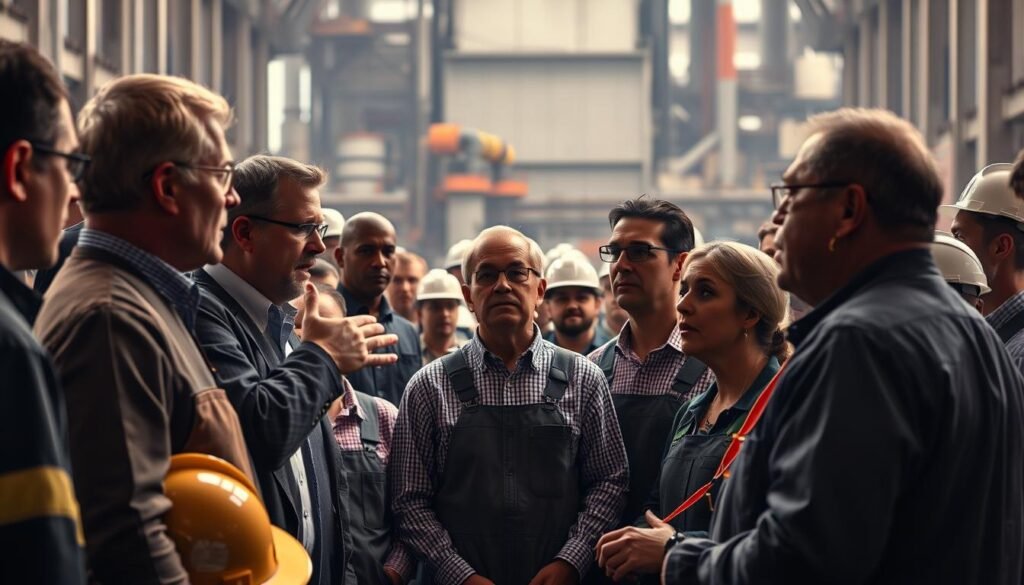
Collective bargaining in Colombia follows clear legal rules but varies in practice across companies and sectors. The Constitution guarantees the right to associate and sets the foundation for negotiation and protection. En este contexto, el fortalecimiento de la negociación colectiva puede contribuir a mejorar las condiciones laborales y salariales de los trabajadores. Además, al abordar las particularidades de cada sector, se pueden potenciar los beneficios del tratado de doble imposición, lo que incentiva mayores inversiones y estabilidad económica. Así, la negociación colectiva no solo beneficia a los trabajadores, sino que también propicia un ambiente favorable para el desarrollo empresarial.
Union types and affiliation
Three legal types exist: company, industry, and gremial. Each requires a minimum of 25 affiliates to form officially. Employees may belong to more than one trade union, and each union must be negotiated with regardless of size.
Initiating bargaining and agreement scope
Only a trade union can initiate bargaining; employers cannot force a start. Agreements become collective bargaining agreements and can extend to all employees if a union wins the required majority.
Representation, protection, and strike rights
Union executive boards of up to ten members enjoy fuero sindical job stability. Every employer with at least one affiliate must keep a complaints committee with two protected members.
The right to strike follows failed negotiations, breaches of legal or conventional rights, or solidarity actions. Essential public services face limits on strike scope.
We note government oversight and courts play a key role in resolving cases and protecting freedom of association. For practical guidance on dispute handling and relevant cases, see collective bargaining cases.
Violence, threats, and protections: the ongoing risk to trade unionists
We document the scale and patterns of violence that shape bargaining and safety for trade unionists. Between 1986 and 2010 an estimated 2,832 to around 4,000 trade unionists were killed. From 2000–2010 the country accounted for over 60% of recorded global murders of unionists.
Recent data shows the crisis endures: the ITUC logged 22 trade unionists killed worldwide to March 2024, of which 11 occurred here. Between 2020 and 2023, 45 murders were recorded domestically, with 29 in 2022 alone.
Perpetrators, regions, and hotspots
Perpetrators include paramilitary groups, guerrilla forces, and at times security personnel. Regions with high threats include Cauca, Nariño, Putumayo, Arauca, Norte de Santander, Caquetá and Antioquia, which historically concentrated nearly half of earlier murders.
State recognition and protective steps
In 2023 the government recognized trade organization members collectively as conflict victims. This legal status can improve investigations and access to protective measures, but implementation and accountability remain essential.
Employer responsibility and practical protections
We urge employers and multinational buyers to adopt robust due diligence and public condemnation of attacks linked to organizing or wage talks.
- Scale and trends: sustained murders and systemic violations across decades.
- Risk timing: spikes often cluster around bargaining seasons and local leadership activity.
- Practical steps: risk assessments, secure travel, rapid reporting, and coordinated protection plans.
Documenting cases and working with civil society and international bodies is key to reduce impunity and make collective bargaining viable and safer for leaders and workers.
What’s next for workers, unions, and employers: building safer, stronger collective bargaining
A practical plan can reduce violence, widen coverage, and make bargaining a stable part of economic life.
We propose clear steps: prioritize safety protocols, invest in training for leaders and members, and set joint risk committees with employers. The ITUC urges companies to act beyond codes of conduct, and the 2023 government recognition opens new paths for faster case investigations.
Employers should adopt human rights due diligence, transparent grievance channels, and public non-retaliation commitments. We back sector-level frameworks, data-driven bargaining agendas, and stronger witness protection so perpetrators face consequences.
Partnerships with international groups and targeted support for women workers can strengthen results. For a focused example of port organizing and international links see the dockworker organizing study.
We call on employers, unions, and the state to align: safe workplaces, fair agreements, and resilient institutions that protect trade and trade union members.